The Deliberate Digital Legacy: Taking Control of Your Next Chapter

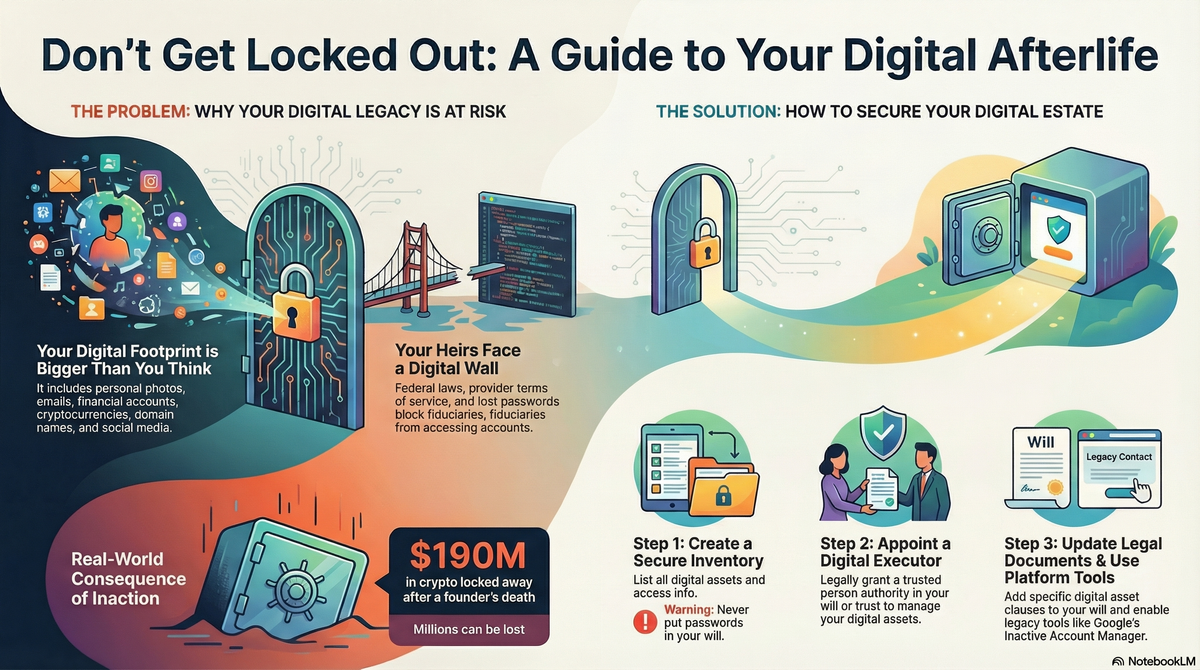
Talking about death has been considered a taboo in most societies. We often operate with a surplus of optimism, fueled by the rising life expectancy of our elders. We often witness disasters and accidents on social media or see hackers zero out a lifetime of savings. We see these risks, but feel comfortable that they won't happen to us. We chose not to think ahead just to avoid stress.
Few ever think about the fact that one day, we may leave behind both our most valuable and sentimental assets, both tangible and virtual. Ever think about what happens to social media accounts, purchased online videos, and digital investments of people who have passed away?
But here's the truth: You have the power to prevent digital chaos.
From cryptocurrency to family photos, these assets can be lost forever, not through theft, but through an unusable password or the lack of knowledge on the details of the Terms of Service agreement we say "Yes" to when we sign up for accounts that eventually become our digital self.
Being proactive and deliberate about your digital afterlife is simply the next step in innovative, modern cybersecurity. It's about securing your legacy now so the people you care about don't face unnecessary burdens later.
Here are the most practical resources and steps you can take right now to start building your secure digital legacy.
1. Be Aware of the the Law
To truly understand the power you have, you need to know the law that governs access to your accounts.
- Resource: Search for the Revised Uniform Fiduciary Access to Digital Assets Act (RUFADAA), which most US states have adopted.
- Practical Example: Look up your state's specific version of RUFADAA. Understanding this act will show you why simply listing passwords in a will isn't enough—your wishes must align with the law's structure.
2. Platform Tools (The "What Overrules the Will")
Remember that the online service provider often has the final say. Use their dedicated tools to clearly state your wishes.
- Resource: Look for the Legacy Contact or Inactive Account Manager settings on your most important accounts.
- Google: Search for "Google Inactive Account Manager." This lets you designate who gets access to your files (like Gmail, Photos, Drive) after a period of inactivity.
- Apple: Search for "Apple Digital Legacy." This allows you to name a trusted person who can access your iCloud data and personal information.
- Practical Example: Set up the Legacy Contact on your primary email account and social media accounts today. This single action gives your chosen person the highest legal priority under RUFADAA.
3. Secure Inventory (The "How to Pass the Keys")
This is where your personal cybersecurity comes into play. You need a safe, encrypted place for your critical information—a place that is not your public will.
- Resource: The best tools are password managers with built-in inheritance features. Look into secure options like 1Password or LastPass.
- Practical Example: Start using one of these tools. Don't just save passwords; look for the dedicated "Emergency Access" or "Trusted Contact" feature. You can securely designate a family member who will only gain access to the vault after a verification period, keeping your data secure. At the same time, you're alive but accessible when needed.
The Final Word: Inventory is Not a Will
Gathering the data is the hardest part. Thankfully, many companies offer helpful DIY Kits or Digital Asset Checklists (often available for free from online legal services or financial planners) to aid this process. These kits are fantastic for one purpose: creating a comprehensive, organized inventory of your accounts.
However, I must stress this: This inventory is NOT your legal plan.
A checklist cannot draft a legal clause that properly grants your executor the authority required under RUFADAA, nor can it advise on the complexities of asset transfers (such as crypto).
Start with the DIY tools, but finish with a professional.
Don't leave your digital legacy to chance. I highly recommend you check out the work being done at an actual estate planning firm to see how these legal directives are drafted.
Visit StejLaw's website to learn about the intricacies of incorporating digital assets into wills and trusts. This is a crucial step in ensuring your personal inventory translates into legally enforceable instructions.
Contact an estate planning firm like StejLaw to draft the legal documents, and feel free to ask for guidance on securing your digital footprint for the future.